|
by Bill Livingston
Cleveland Plain Dealer
Thursday August 14, 2008
 For
those of us who have felt imprisoned by wall-to-wall beach
volleyball, tumblers and bar-hoppers (high, uneven and parallel),
take heart. Our Olympics begin Friday when track and field starts
with the men's shot put final. For
those of us who have felt imprisoned by wall-to-wall beach
volleyball, tumblers and bar-hoppers (high, uneven and parallel),
take heart. Our Olympics begin Friday when track and field starts
with the men's shot put final.
I've always harbored an unfashionable
fondness for the field events. I am prejudiced, but I feel my book,
due out next month, about the pole vault and Westlake and St.
Ignatius gold medalist Tim Mack "Above and Beyond -- Tim Mack, the
Pole Vault, and the Quest for Olympic Gold" is the only book
available that tries to capture the spectacle, daring and danger of
the event, rather than simply supplying technical training tips. It
can be pre-ordered here and here.
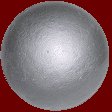
But before I ever wrote about the pole vault, I liked the shot put.
It is known as "The King of Throws" because usually the biggest and
strongest men and women participate in it. No aerodynamics, no
tailwind/headwind variable comes into play. The only thing that
moves that 16-pound lump of iron or steel is the thrower's explosion
across the ring and the power he can muster when he unleashes all he
has. Spinning, screaming, so much size and torque penned in a small
concrete ring -- it is like watching the Incredible Hulk about to
pop his seams.
Besides, I had a history with the shot. The winter's big meet in my
hometown of Dallas was always held in a building on the State
Fairgrounds. The big attraction was Texas A&M's Randy Matson, who
won the gold medal at the Mexico City Olympics in 1968. Matson also
played basketball for the Aggies and was big enough, quick enough,
and strong enough to be drafted by the NFL, NBA and the old ABA. To
hear him scream and bust 60-footers routinely was as much a part of
the winter in Texas as waiting for spring football.
Many years later, in 2004, I enjoyed the greatest experience of any
of the seven Olympics I covered at the men and women's shot put
final in Ancient Olympia in western Greece.
Originally, the Athens organizers wanted to hold the discus throw
there, but the field was too small and the flying disks could have
beaned spectators. The shot put, which requires a playing field only
75 feet or a little more long, was held instead, even though the
event did not exist in the Ancient Olympics.
I remember the marble ruins on the site where the Olympics began,
the heat and the incredible greenery of the bushes and trees.
Olympia's lush scenery is fed by a river carrying snow melt from the
nearby mountains. The marble monuments the ancient Greeks built with
their hands were crumbling, but what they conceived in their heads
-- how to think, how to live and how to play -- will last forever.
I wrote my column with my computer perched on a wall near a small
park in Olympia. A street artist who had set up nearby gave me a
chair and would take no money for the favor. Diners emerged from
small restaurants and danced on the sidewalks to Greek music that
was piped over a loudspeaker. Everyone who made the nine-hour
roundtrip bus ride from Athens channeled the warmth and joy of the
place.
There were no seats, only squatting room on the hillside, where the
ancient Greeks had watched sprinters race approximately 200 meters
in the first Olympic event. It was ferociously hot. Mike LoPresti, a
buddy from the Gannett News Service, and I found the only scrap of
shade between Olympia and Athens and lay down in it, each at one end
of the pillow LoPresti had brought with him.
Then we stumbled to our feet and found a
spot in the blazing sun as the men's final began. American Adam
Nelson popped a 69-foot, 5 1-4-inch throw in his first try and took
the lead. He fouled on his next four attempts, once dropping the
ball for a mark of 6 inches, once whirling out of the ring and
landing near a judge's feet.
Ukraine's Yuriy Bilonog, one centimeter short on an early throw,
tied Nelson on his least heave, the iron ball sending up a puff of
dust when it landed with a thud.
Now Nelson's gold medal chances were coming down as hard. The
tiebreaker is the second-best mark by each competitor, and he had no
other legal throws. The Ukrainian would win unless Nelson improved
on his last try.
It had been expected to be an American sweep, but John Godina fouled
twice in the morning prelims and did not make the final.
Foul-plagued Christian Cantwell, who had the best throw of the year,
did not make it out of the Olympic Trials.
The most animated shot putter in the world, Nelson puffed his
cheeks, implored the crowd to clap, took a couple of steps toward
the ring, and then whipped his warm-up shirt to the ground, picked
up the iron ball, spun and ...
Fouled again.
For three minutes, he stood in the throwing ring, arguing about the
last foul, then he sobbed on his wife's shoulder and buried his face
in an American flag.
Nelson, with two straight Olympic silver medals, is back Friday.
Cantwell made it as well. Along with Reese Hoffa, they could sweep
in Beijing.
But it won't be like it was in Olympia, where the Ancient Olympics
began 28 centuries ago, where the previous Olympic competition had
taken place in 393 A.D. What possibly could be?
|